
Al Fayoum is a unique destination where ancient history, geology, and art converge. It is one of the few places in Egypt where you can see prehistoric whale fossils, Pharaonic temples, and modern pottery art all in one trip.
Here is a guide to the specific sites you requested, organized by their location and what makes them special.
- Wadi Al-Hitan (Valley of the Whales)
this is the famous UNESCO World Heritage Site.
- What it is: An open-air museum that displays the fossilized skeletons of the earliest form of whales (Archaeoceti), dating back 40 million years.
- Key Highlights:
- The Walking Track: A marked path leads you through the desert where you can see massive whale skeletons still partially embedded in the sand.
- Evolutionary Proof: The fossils here show whales with hind legs, capturing the moment in evolution when they transitioned from land animals to ocean dwellers.
- Fossils & Climate Change Museum: A beautiful dome-shaped museum onsite housing the largest intact Basilosaurus skeleton.
- Why Visit: It is a world-class site. Walking here feels like walking on the bottom of an ancient ocean.
- Wadi El Rayan & Desert Safari
The hub for adventure and water landscapes.
- What it is: A natural depression famous for having two lakes connected by Egypt’s only waterfalls. It is the gateway for desert activities.
- Key Highlights:
- The Waterfalls: A scenic spot where the upper lake flows into the lower lake.
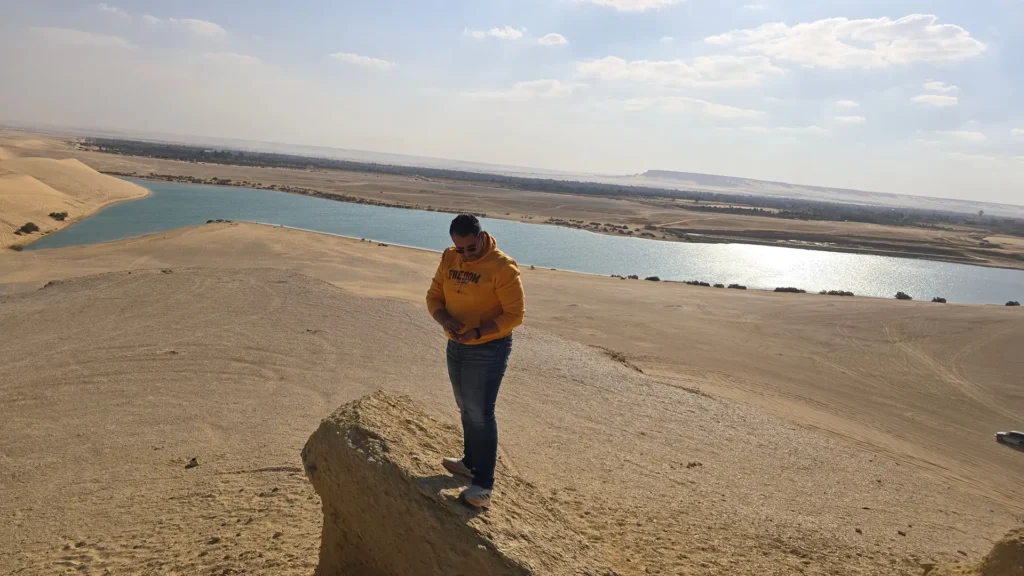
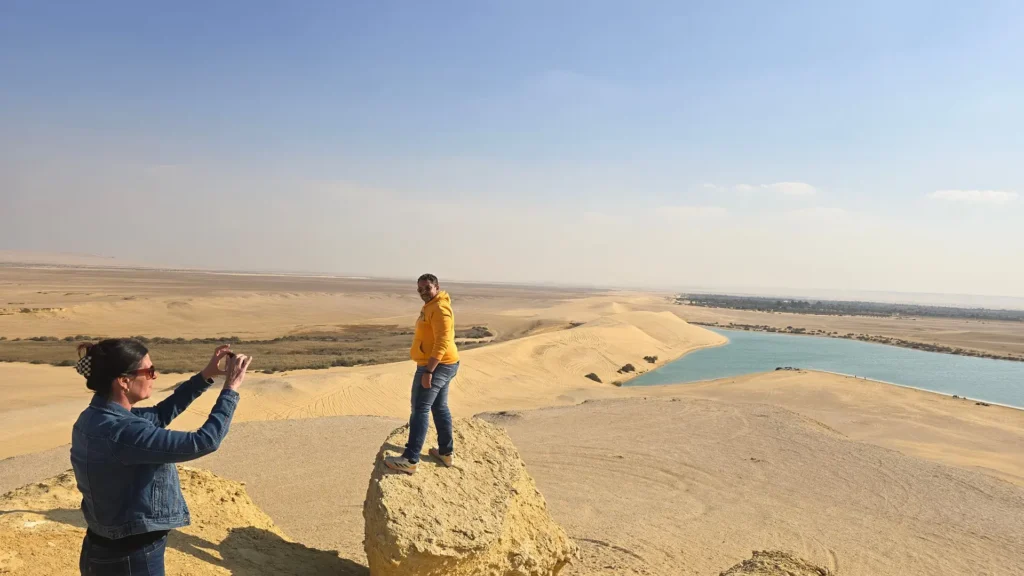
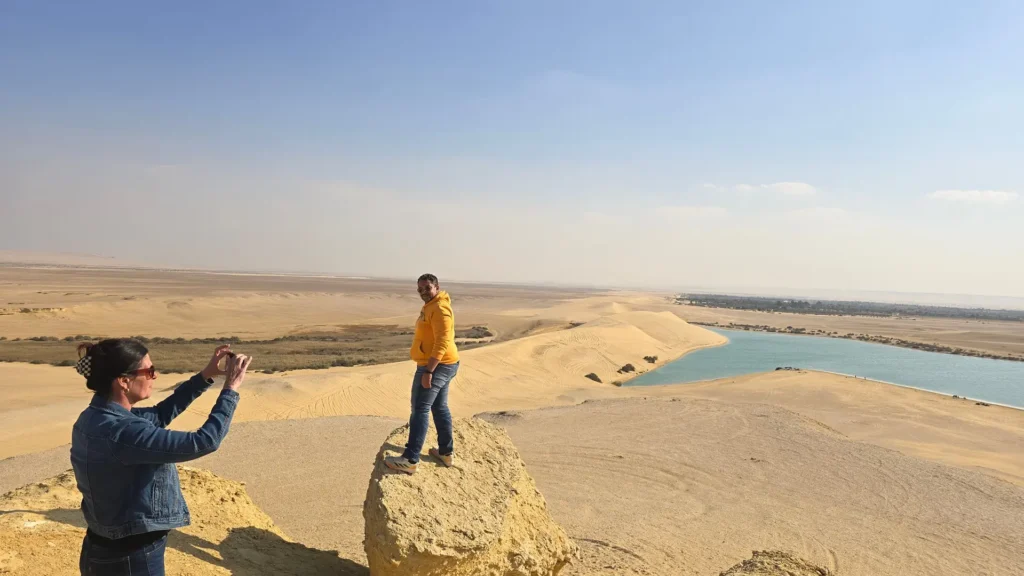
- Magic Lake: A stunning lake surrounded by sand dunes. It changes color depending on the sunlight and is a favorite spot for swimming.
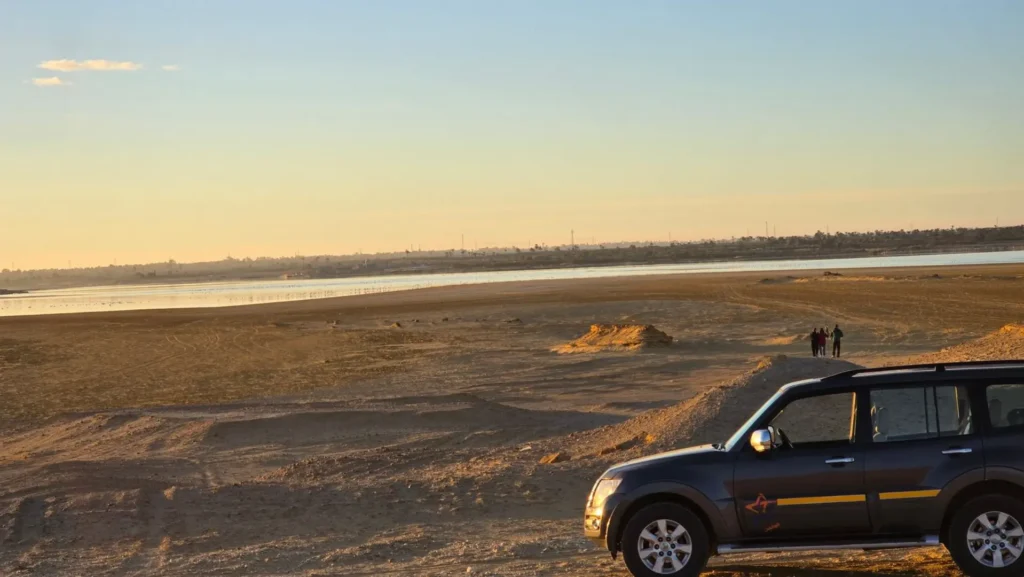
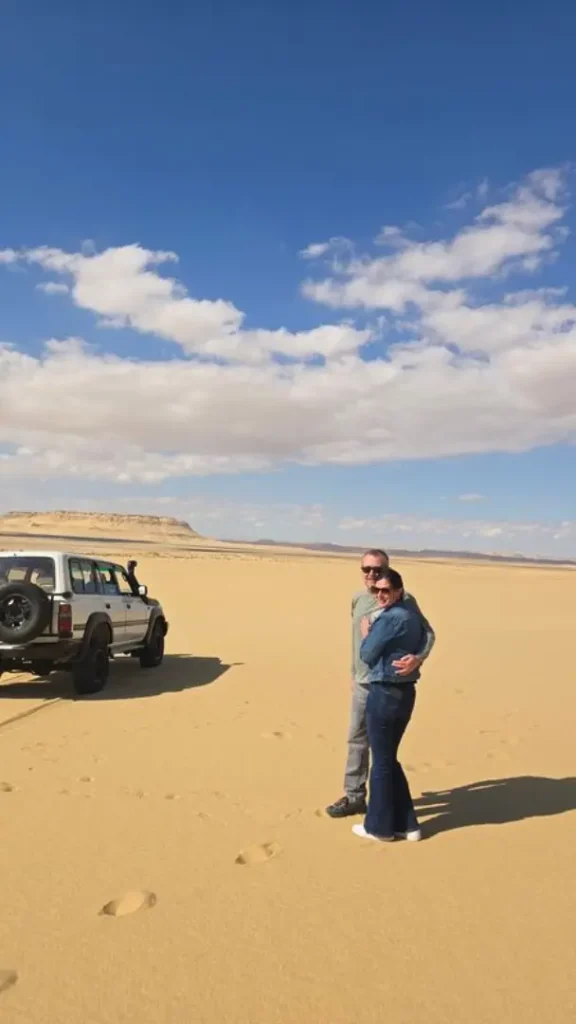
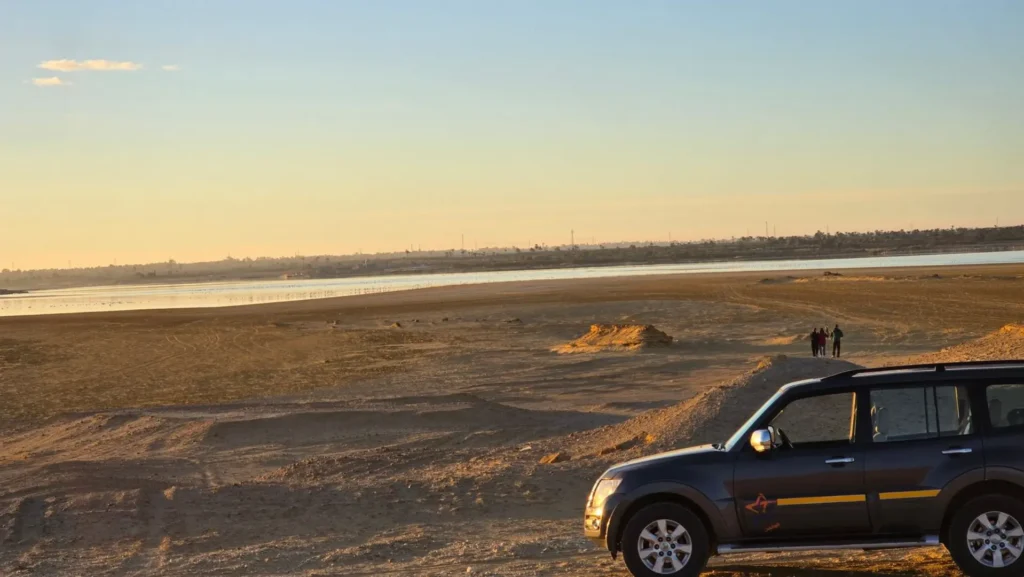
- Desert Safari: This is the best place to rent a 4×4 Land Cruiser for “dune bashing.”
- Sandboarding: The soft dunes around the Magic Lake are perfect for gliding down on sandboards.
- Tunis Village
The artistic heart of the oasis.
- What it is: A small, picturesque village on a hill overlooking Lake Qarun, famous for its pottery workshops and rural architecture.
- Key Highlights:
- Pottery: Established by Swiss potter Evelyne Porret, the village is full of workshops where you can buy handmade ceramics or take a class to make your own.
- Architecture: The village is known for its beautiful domed eco-lodges and green gardens.
- Caricature Museum: A quirky museum housing a collection of Egyptian satirical art.
- Why Visit: It is the perfect place to have lunch, buy souvenirs, or stay overnight in a relaxing, bohemian atmosphere.
- North Lake Sites: The Petrified Forest
north of Lake Qarun, this geological wonder contains the remains of a massive forest from the Oligocene epoch (over 30 million years ago).
- Key Highlights:
- Stone Trees: You will see huge tree trunks, some up to 30 meters long, that have completely turned into stone.
- The Landscape: The area (Gabal Qatrani) is rugged and moon-like, vastly different from the soft dunes of the south.
- Important Note: This site is in the deep desert north of the lake and usually requires a 4×4 vehicle and a permit/guide to access.
- Temple of Qasr Al-Sagha
The mysterious Golden Fortress.
- What it is: An ancient Middle Kingdom temple (likely 12th Dynasty) discovered north of Lake Qarun.
- Key Highlights:
- Architecture: The temple is built of massive, irregular limestone blocks that fit together like a puzzle (polygonal masonry). It was never finished.
- The Location: It sits on a plateau that marks the ancient shoreline of the old lake (Lake Moeris).
- Why Visit: It is a hidden gem. Unlike the crowded temples in Luxor, you will often find yourself alone here in the silence of the desert.
Suggested Logical Route
Since these sites are in different areas (North vs. South), here is how they fit together: - The South Loop (Most Popular): Start at Tunis Village for breakfast/pottery \rightarrow Drive to Wadi El Rayan for waterfalls and sandboarding \rightarrow Continue deep into the desert to Wadi Al-Hitan.
- The North Loop (Adventure): This requires a 4×4. You drive north of Lake Qarun to see Qasr Al-Sagha, the ancient city of Dimeh es-Shedid, and the Petrified Forest.